
Brainspotting Therapy in Boulder & via telehealth across Colorado and North Carolina
Some things can't be talked through. They have to be found.
When the body holds something too deep for words, Brainspotting helps you locate it — and finally let it move
The brain-body connection
There are experiences that don't respond to insight. You've done the work. You understand your patterns, you can trace them back to their roots — and yet something remains. A tightness that won't release. A reaction that still fires before you can stop it. A place in you that stays frozen no matter how much clarity you've gathered.
Brainspotting works differently. Developed by Dr. David Grand, it is a precision neurobiological approach that locates trauma not in the story you tell about it, but in the specific place in your visual field that connects to where it lives in your brain and body. When we find that spot — your "brainspot" — and hold it with attuned presence, the brain's natural capacity to heal can finally activate.
This is not about revisiting your past. It is about giving your nervous system the relational conditions it needs to process what it has been holding alone.
Why Brainspotting works
Most trauma approaches work top-down — starting with thought, insight, or narrative. Brainspotting works from the subcortex up, accessing the deeper brain structures where trauma is actually stored: below language, below conscious memory, below the parts of you that already know better.
What makes it different is the combination of two things working together: focused eye position and bilateral sound. The eye position locates the neural network holding the trauma. The sound — gentle tones through headphones — supports the brain's processing in real time. Together, they create conditions for the kind of deep, non-verbal healing that talk therapy alone often can't reach.
It goes where words don't: Brainspotting bypasses the need to verbalize or re-tell. The body leads.
It works with what's already there: We aren't installing new coping strategies. We are unlocking your system's own capacity to heal.
The relationship is part of the medicine: The therapist's attuned presence — what BSP calls "dual attunement" — is not incidental. It is what makes the processing possible. A genuine relational container is what allows the nervous system to finally let go.
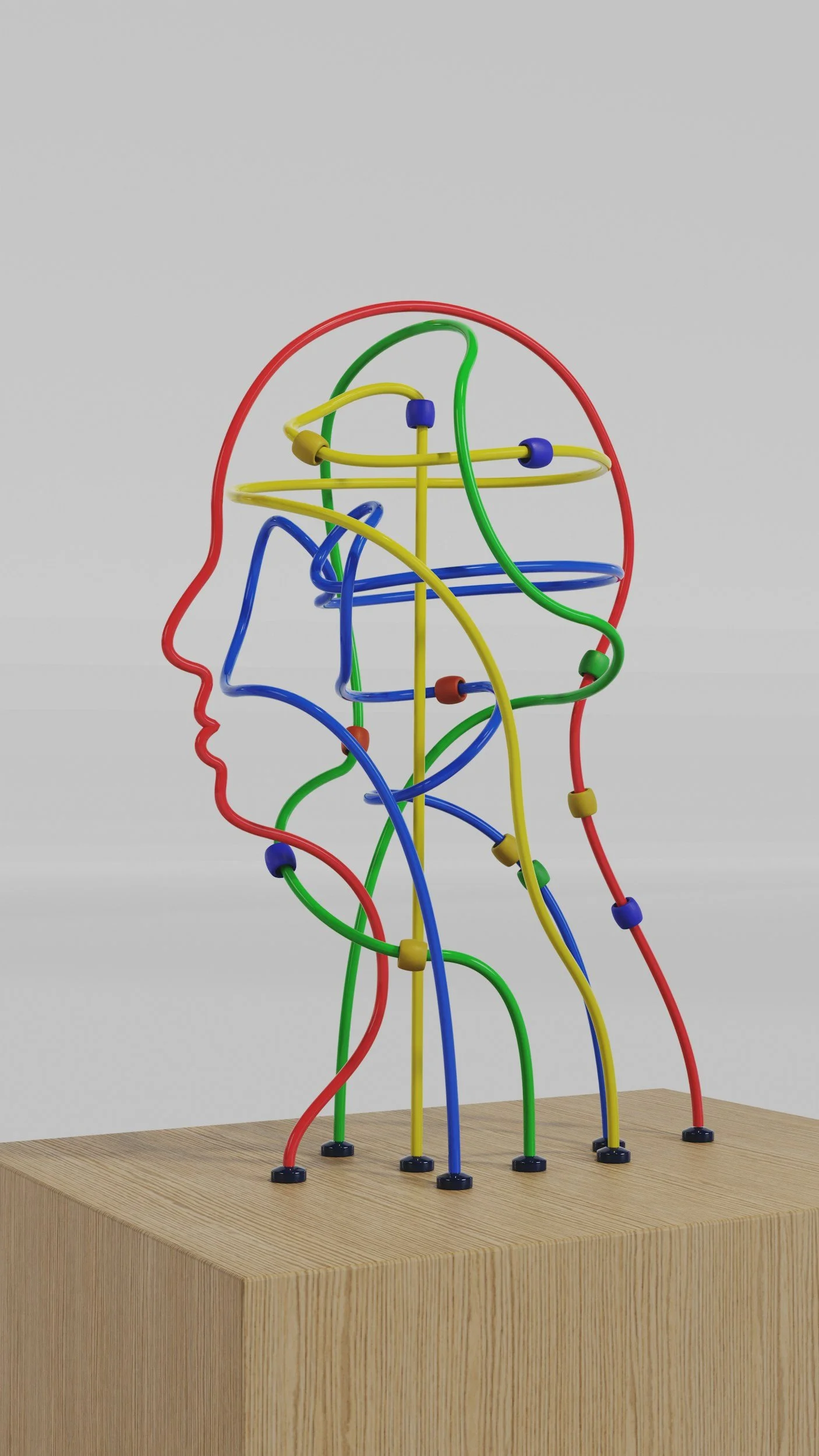
What we might work on together
Brainspotting is particularly effective for:
Trauma and PTSD — including single-incident and complex, developmental trauma
Anxiety, panic, and chronic activation that hasn't responded to other approaches
Depression with a felt, somatic quality — heaviness, flatness, disconnection from self
Attachment wounds and relational trauma
Grief and loss
Chronic pain and physical symptoms with an emotional or nervous system component
Performance anxiety and creative blocks
Neurodivergent nervous systems carrying years of overstimulation and masking
FAQs about Brainspotting
-
We begin by identifying something you want to work on — a feeling, a memory, a physical sensation, or a pattern. I'll guide you to locate where you feel it in your body, then help you find the eye position that connects to it. From there, you simply notice what arises — sensations, images, emotions, memories — while I remain present alongside you. Most people describe it as deep, quiet, and surprisingly different from anything they've experienced in therapy before.n text goes here
-
No. Brainspotting doesn't require you to narrate your experience. You can process in silence. The brain and body do the work — your job is to notice and stay present with whatever comes.
-
Some processing can bring up activation — emotion, sensation, or imagery — during or after a session. This is normal and part of the healing. We work within your window of tolerance, and I will support you in integrating what arises rather than leaving you with more than you can hold.
-
Both approaches use eye position and bilateral stimulation, and both work with trauma beneath the verbal level. Brainspotting is more open and body-led — rather than structured sets of eye movements, we find and hold a fixed point, allowing your system to process at its own pace. Many people who haven't responded fully to EMDR find Brainspotting reaches something different.
-
Yes. Brainspotting translates well to video. I'll guide you through the process and provide bilateral sound through your own headphones. Many clients find the privacy of their own space actually supports deeper processing.
-
It varies significantly. Some people experience meaningful shifts in a single session. Complex or developmental trauma typically requires more time. We move at the pace your nervous system sets.